DESTINATIONS
Paris for first-timers: the big sights, without the queues
Timed tickets, closing days, getting in from the airport and a simple three-day plan for a first visit to Paris.
Paris rewards planning more than almost any city. The famous sights are famous for a reason, but so are their lines, and a first visit can disappear into queues if you leave the details to chance. A little booking ahead turns a frantic checklist into a calm walk between masterpieces, and it costs nothing beyond a few minutes online.
This guide covers the big sights, how to book them, how to get around, and a simple three-day outline that leaves room to breathe.
Book ahead for the big sights
Most of the headline attractions sell timed entry tickets, and the popular slots for popular days go first, so book as soon as your dates are firm. Treat the entry time as a real appointment rather than a suggestion, and plan the rest of the day around it.
The Louvre, home of the Mona Lisa and one of the largest collections of art in the world, rewards planning on two fronts: book a timed entry in advance, and remember that it is closed on Tuesdays. The Eiffel Tower is another one to book ahead, especially if you want to go to the top, where ticket numbers are limited. The Musée d'Orsay, the impressionist collection housed in a former railway station, is closed on Mondays, so check the day before you build it into your plan.
Sainte-Chapelle, a small chapel filled with stained glass on the Île de la Cité, is a short visit that leaves a long impression. Notre-Dame, badly damaged in the fire of 2019, reopened in December 2024 and belongs on any first-visit list. If Versailles is a priority, plan it as a full day trip by train and book the palace in advance, so the day is spent in the gardens and the gilded halls rather than at the ticket office.
For touring at your own pace, companies such as WeGoTrip offer self-guided audio tours, and Tiqets sells tickets for museums and attractions.
Montmartre, Sacré-Cœur and the river
Some of the best moments in Paris need no ticket at all. Montmartre, the hilltop quarter of narrow lanes and artists' studios, is best visited early, before the crowds gather, and the view from Sacré-Cœur at its summit sweeps across the whole city. It is a neighborhood to wander rather than to check off.
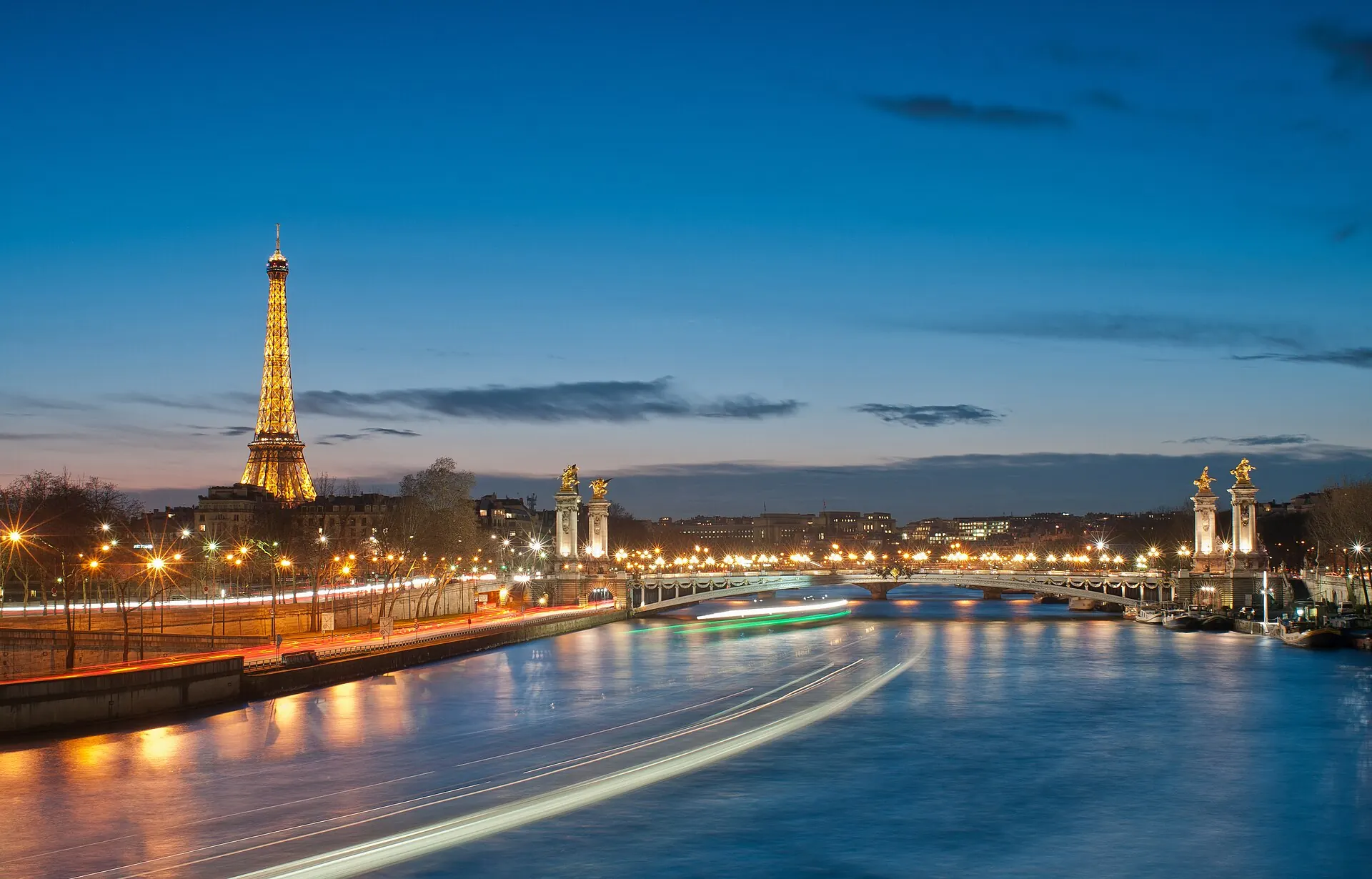
A Seine river cruise is the easiest way to see the city from its own waterline, with the Louvre, Notre-Dame and the Eiffel Tower sliding past in one unhurried loop. A daytime cruise works well as a rest between sights, and an evening one adds the lit monuments.
The best memories of a first visit often cost nothing: a hilltop view, a river loop, a bench with a baguette.
Getting around Paris
The Métro and the RER cover the city and its edges, and they are usually the fastest way between neighborhoods. The network is dense, with stations in every area you are likely to visit, and a short ride covers most transfers between the big sights.
From Charles de Gaulle airport, the RER B train runs into central Paris, where it connects with the Métro for the last leg of your journey. Orly is the other main airport, on the south side of the city. Walking is underrated here too: many of the headline sights sit within a walkable core, and the streets between them are half the visit.
Passes, water and pickpockets
If you plan to visit several paid sights, look into museum passes, which bundle entry to many museums and attractions into one ticket. Check whether the included list matches your plans before buying, since a pass only pays off when it fits your itinerary rather than the other way around.
Carry a reusable water bottle and refill it at the city's public fountains, and you will save both money and small errands. In crowded spots such as the Métro and around the major monuments, beware of pickpockets: keep your bag closed and in front of you, and your phone out of an open pocket.
Go City also sells sightseeing passes that bundle several Paris attractions.
A simple three-day outline
This outline pairs one big booking day with two lighter ones, keeps most travel on foot or a short Métro ride, and leaves the evenings free for whatever Paris does best.
Day 1: the river and the islands
Start at Sainte-Chapelle and Notre-Dame, then take a Seine cruise in the afternoon and finish with an evening walk along the river as the lights come on.
Day 2: the Louvre and Montmartre
Take a morning timed slot at the Louvre, then ride the Métro up to Montmartre in the late afternoon for Sacré-Cœur and the view over the rooftops.
Day 3: the Eiffel Tower and a choice
Book the Eiffel Tower for the morning, the top if you want it. For the afternoon, either visit the Musée d'Orsay, checking the day since it closes on Mondays, or keep it slow with cafés and markets. If Versailles is a must, give it a full day by train and trim one of the other days to match.